There is a specific feeling that arrives a half-second before anyone else in the room notices anything has changed. Not a thought. Not a conclusion you could defend if someone asked you to explain it. Just a shift — in the air, in the spacing between people, in the rhythm of a conversation that was moving one way and is now, almost imperceptibly, moving another.
Some people get this on a football pitch. Some people get this in a meeting room. A smaller number get it in both, and spend a fair amount of time wondering whether it is actually the same skill wearing two different shirts.
It is. And once you start looking for it, the mechanism behind it turns out to be one of the more well-studied and least appreciated forms of intelligence there is.
The Defender Who Fills the Gap Before It Opens
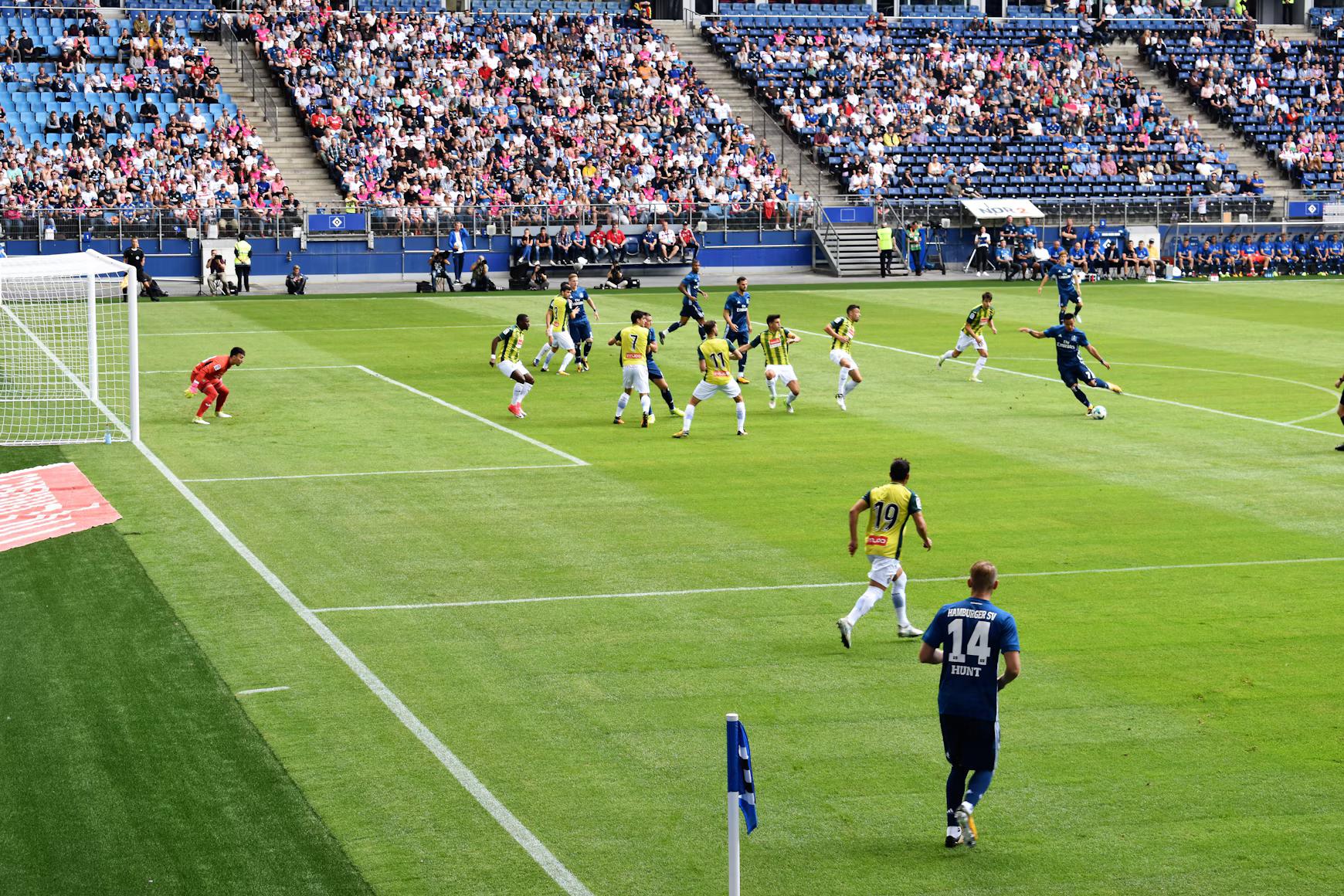
Play enough football as a central defender and a particular instinct starts to form, usually without anyone teaching it directly. The team in front of you gets disorganised — a midfielder caught upfield, a full-back dragged out of position, the shape stretched by a counter nobody quite tracked — and before the danger has fully arrived, you are already moving to cover it. Not reacting to the pass that is about to be played. Reacting to the disorganisation itself, the structural gap that the danger has not yet found but will.
This is not the same skill as reading the ball. Reading the ball is anticipation of an object's trajectory — useful, learnable, mechanical in a way that can be drilled. What is being described here is something a level up: reading the shape of a situation, sensing that a system has become unstable before any single visible event proves it. The cover is not a response to what is happening. It is a response to what the current configuration makes likely to happen next.
The strange part is how little of this is conscious in the moment. You do not run through a checklist — full-back is high, midfielder is turned the wrong way, therefore the half-space is exposed. You just feel the wrongness of the picture and your body starts closing the gap before the analysis would have finished running. Ask afterwards why you made the read and the honest answer is usually some version of it just felt off. That is not an unsatisfying answer. It is the correct one. The read happened beneath the level where language operates.
The Same Read, Wearing a Different Shirt
The peculiar thing about this skill is that it does not stay on the pitch. Sit in enough meetings, manage enough projects, navigate enough office politics, and the same sensation starts showing up in rooms with no ball in sight.
A meeting is going fine, and then it is not, and the shift happens a full minute before anyone says the sentence that makes it obvious. Someone's tone flattens slightly. A question that would normally get an enthusiastic answer gets a careful one instead. Two people who usually address comments to the room start addressing them to each other. None of this is information, exactly — nobody has said anything that would hold up as evidence. But the shape of the room has changed, the same way a back four's shape changes the instant one player drifts five yards too far forward, and the people who can feel that shift are already adjusting before the people who cannot have noticed anything happened at all.
This is, structurally, the exact same instinct as filling the defensive gap. Not reading the explicit content of what is said. Reading the configuration — who is positioned where, emotionally and conversationally, and what that configuration is making more or less likely to happen next. The colleague who senses a decision is about to go badly before the room has voted on it is doing the corporate version of stepping across to cover a winger nobody else has tracked yet.
What the Science Actually Calls This
Psychologist Malcolm Gladwell popularised a term for this in Blink: thin-slicing — the brain's capacity to find patterns in situations based on very narrow windows of experience, often producing judgments that are not just fast but more accurate than the slower, fully-reasoned alternative. The phrase captures something real: experienced perceivers are not processing less information than careful, deliberate thinkers. They are processing a condensed version of it, filtered through thousands of prior exposures to similar configurations, so that the relevant signal surfaces almost instantly and the irrelevant noise never even reaches conscious attention.
This sits on top of perceptual learning — the well-documented finding that extended exposure to a complex, variable environment reshapes what a person is capable of noticing, not just what they know. A defender who has spent a decade reading disorganised back lines has not just memorised situations. Their perceptual system has been recalibrated to register instability as a category, the way a sommelier's palate gets recalibrated to register specific notes a novice's mouth simply cannot detect yet. The same recalibration happens to anyone who spends years paying close attention to how rooms full of people behave under pressure, ambiguity, or change.
What both domains share is the underlying training condition: high-stakes, time-pressured, socially or spatially complex environments, repeated often enough that the brain stops needing to consciously search for the pattern and starts simply recognising it on arrival. Football trains this through repetition under a literal clock. Office life trains it through repetition under a quieter, slower-moving clock — but the clock is still there, and the read is still the same shape.
The Cost Nobody Mentions
There is a less flattering side to this that is worth being honest about, because it is the part most articles about "reading the room" tend to skip.
Thin-slicing is fast precisely because it is not deliberative — which means it is also occasionally wrong in ways that feel exactly as confident as the times it is right. The defender who reads a phantom danger and steps across unnecessarily has just vacated a space that was, in fact, fine. The employee who reads tension into a room that was simply tired, or quiet for reasons that had nothing to do with what they assumed, has just made a social move — a cautious comment, a defensive posture, a withheld idea — based on a signal that was never really there. The same mechanism that produces brilliant anticipatory reads produces false positives with identical conviction. There is no internal alarm that distinguishes a correct thin-slice from an incorrect one. Both arrive feeling exactly the same: certain, immediate, and entirely pre-verbal.
This is worth sitting with if reading the room is something you are good at, because the skill's biggest blind spot is that it does not announce its own failure rate. You only find out you misread the moment after you have already acted on it — closed the gap that did not need closing, gone quiet in a meeting that needed your voice, assumed hostility in a silence that was actually just someone choosing their words. The instinct is genuinely valuable. It is not infallible, and the people best at using it tend to be the ones who have also learned, the hard way, when to override it.
Why the Overlap Is Not a Coincidence
It is tempting to treat the football read and the corporate read as a charming parallel — two unrelated skills that happen to resemble each other if you squint. The more accurate description is that they are the same cognitive faculty, trained in two different arenas, both of which reward the same underlying capacity: noticing structural change before it becomes explicit content.
A football pitch and a meeting room have almost nothing in common on the surface. Underneath, they are both environments where a stable configuration can shift into an unstable one faster than anyone can articulate, where the people who survive and the people who get caught out are often separated by nothing more than how early they noticed the shape had already changed. The defender filling the gap and the colleague who feels a decision turning bad are not doing two different things that happen to look alike. They are doing the same thing, in different rooms, for the same underlying reason — because somewhere along the way, each environment trained them to feel the shift before they could have explained it.
misterillahi•Oct 11, 2026 On September 25, 2026, an independent commission found Manchester City guilty of 114 of the 115 charges brought against them by the Premier League — charges covering financial rules, disclosure obligations, and cooperation, stretching back to the 2009–2018 period. City are appealing.
I should say upfront: I support Manchester United. There is an obvious, easy version of this piece where a United fan sees a guilty verdict against City and writes something gleeful. That is not what this is. If anything, I've hesitated to write about this at all, because "we told you so" is the most boring possible reaction, and because the actual thing worth talking about here has nothing to do with which shirt I wear on a Saturday.
It's this: what happens to a principle the moment it stops being convenient?
The Standard That Only Works One Way
Pep Guardiola, defending his club publicly in 2024, said something that on its own is unimpeachable: "Everyone is innocent until proven guilty." It's a real legal standard, and a fair one. Nobody should be treated as guilty before a process has actually run.
But a standard like that only means something if it applies at both ends. It's easy to believe in "innocent until proven guilty" when you're the one waiting for proof. The actual test of whether you believe in it is what you say once the proof arrives and it doesn't go your way.
That's the moment this piece is actually about. Not the years of "let the process play out." The next sentence. The one that comes right after the verdict, when "innocent until proven guilty" quietly turns into "the process got it wrong."
This Isn't Really About Appeals
To be clear: appealing a verdict is not, by itself, dishonest. It's a normal part of any legal process, and City are entitled to use it. Nobody should be criticized simply for exercising a right that exists precisely for cases like this.
What's worth noticing is the pattern, not the mechanism. Before the verdict: patience, calm, "trust the process," a standard invoked with total confidence. After the verdict: the same process — the one just invoked as fair — is suddenly described as having gotten it wrong.
You've probably seen this exact shift somewhere that has nothing to do with football. The employee who says "let HR investigate properly" right up until HR's finding doesn't go their way, at which point HR is suddenly biased. The defendant's family who insists "let the court decide" until the court decides, at which point the court didn't understand the full context. The teenager who wants a strict rule enforced "fairly" until it's enforced on them, at which point the rule is unfair.
None of these people are lying, exactly. They usually believe both things sincerely — the belief in the process, and the objection to its outcome. That's what makes it worth paying attention to rather than dismissing. It's not hypocrisy in the cartoon sense. It's something quieter and far more common: we are all fairer in principle than we are in the specific moment the principle costs us something.
There's a version of this that's even harder to catch, because it doesn't announce itself as a double standard at all. It's the version where you genuinely can't tell, from the inside, whether you're appealing because the process failed or because the outcome hurt. Those two feel identical in the moment. Only time, and what you do next, tells them apart.
What This Actually Cost, If It's True
Here's the part that's easy to skip past if you're not the one it affects.
The charges span 2009 to 2018. In that window, Manchester City won three Premier League titles. Manchester United finished runner-up to them twice. Arsenal and Liverpool also finished as runners-up in seasons City won the league. In Europe, City built the squad and results that eventually delivered the Champions League in 2023 — a trajectory that started with the financial foundation this commission has now ruled was built on breached rules.
If the findings hold, this isn't an abstract regulatory matter. It's a decade in which specific clubs lost specific things — titles, European qualification, managerial jobs, players' peak years spent competing against a version of City that wasn't playing by the same financial rules as everyone else. In 2024, four clubs — Arsenal, Manchester United, Liverpool, and Tottenham — served legal notices reserving their right to seek compensation for exactly this: the competitive disadvantage they say City's breaches caused them.
Legal experts are broadly skeptical that any of those clubs will actually collect anything. Proving that a specific title or a specific European spot was lost because of City's specific financial breaches — rather than a hundred other footballing variables — is an extremely difficult thing to establish in court. That skepticism is probably well-founded as a legal matter. I'm no legal expert, and this piece isn't trying to be a legal argument — I'm just a fan concerned with the voice of it, the plain unfairness a supporter feels watching this play out, whatever a courtroom ultimately decides.
But legal difficulty and actual unfairness are two different things. A wrong doesn't stop being a wrong just because it's hard to put a number on it in a courtroom. Something happened to those clubs, those managers, those players, across a decade of competing in conditions that — if the commission is right — weren't level. The fact that no court will ever cleanly quantify it doesn't mean nobody paid for it. It means the cost was real and the bill will never be presented.
This is the quiet cruelty of any rules violation that plays out over years instead of one moment: there's no equivalent of a disallowed goal. Nobody replays the 2011–12 title race and hands it to someone else. The trophies stay in the cabinet. The seasons stay in the record books. The only thing that changes is what we now know about how they were won — and knowing doesn't undo anything. It just sits there, permanently unresolved, next to the trophy.
The Punishment Nobody Can Agree On
From where I'm sitting, this has to be one of the strangest positions football has ever put itself in. A club found guilty on 114 of 115 charges, spanning nine years, and the actual consequence is still an open question. Some of the game's more notable pundits and podcasts have made the same point in different words: football has never really decided what a verdict like this is supposed to cost.
There's real precedent for going hard. Juventus were stripped of a title outright over Calciopoli in 2006, with the vacated title eventually handed to Inter Milan — Italian football decided that some breaches are severe enough that the record book itself has to change. On the other side, voices closer to the English game — EFL chairman Darragh MacAnthony among them — have pushed back on that comparison, calling talk of relegation or stripped titles "nonsense," arguing you can't rewrite the past and that City are simply "an easy target" for the more dramatic headlines.
Both of those can't really be true at once. Either the breaches were serious enough to change what happened on the pitch, or they weren't. Everything in between — a fine, a suspended points deduction, a slap that fades from memory within a season — is football trying to have it both ways: acknowledging the guilt without accepting what the guilt should actually mean.
The Premier League has already set its own scale for this, whether it meant to or not. Everton lost 6 to 10 points for one season's overspend. Nottingham Forest lost 4 for the same thing. City's case is nine seasons and 114 proven charges — and if the punishment for that doesn't scale well past what a single bad season cost Everton, the number itself becomes the tell. It would be an admission, in points, that the scale of the breach was never really the point.
That's the part that should worry anyone who cares about the sport, regardless of which club they support. A guilty finding that doesn't change anything sends a clearer message than any punishment could — that breaking the rules is a reasonable bet, as long as you can afford to lose the case later.
The Actual Question Worth Asking
The instinct to appeal isn't the problem. Believing in "innocent until proven guilty" isn't the problem. The problem is treating the appeal as a neutral continuation of that same standard, when it isn't — the standard already ran its full course. An independent commission heard the case and reached a verdict on 114 of 115 charges. That is what "innocent until proven guilty" was building toward the entire time. It happened.
What comes after isn't a defense of the principle. It's a test of something else — whether the acceptance of a process only ever extended as far as the outcome you expected.
The real measure of whether you trust a system isn't how gracefully you accept the verdicts that go your way. It's what you do the moment one doesn't.
misterillahi•Sep 27, 2026 I watched a padel match recently between the world's best pair and two opponents who never had a chance. The scoreline ended 6-0, 6-1. For most of it, the crowd was quiet in the specific way crowds go quiet when the outcome stopped being in doubt somewhere around game four of the first set.
Then, somewhere in the second set, the losing pair broke serve. Won a game. The score moved from something like 4-0 to 4-1.
The crowd applauded.
I have not stopped thinking about that applause since. It was not loud. It was not particularly long. But it was, without question, one of the saddest sounds I have heard at a sporting event — and I could not work out, in the moment or since, exactly what it meant. Was it support? Consolation? Was some portion of it, uncomfortably, amused? The players on the losing side could not have known either. They just received the noise, the way applause is always received: as a single undifferentiated signal, with no way to unpack what was inside it.
The Assumption We Never Examine
Applause seems like the simplest communication system in sport. Something good happens, people clap, the volume and duration roughly track the size of the thing that happened. A tap-in gets polite acknowledgment. A wonder-strike gets a roar. The system appears to have one input and one output, and everyone involved seems to agree on what it means without ever discussing it.
This is mostly true, and it is also almost completely wrong, because applause is not one signal. It is a single physical gesture — hands meeting, repeated, at some volume — that gets used to encode at least half a dozen structurally different, and sometimes directly contradictory, emotional messages. The gesture stays the same. What is inside it changes constantly, and the person receiving it has no reliable way to tell which version they just got.
The Many Things a Clap Can Mean
Genuine celebration is the baseline everyone assumes. A goal, a winning shot, a moment of real quality, applauded in proportion to how good it actually was. This is the version of applause that requires no further thought, which is exactly why it sets the expectation for every other version.
Narrative satisfaction is a different thing entirely. When Robin van Persie scored for Fenerbahçe against Manchester United, years after leaving the club as one of its most decorated forwards, the reaction from the crowd was not primarily about the technical quality of the finish. It was about a story landing correctly — the ageing player, the homecoming, the proof that something still worked. A fairly ordinary goal can receive an extraordinary ovation if the story around it is heavy enough. The crowd is applauding meaning, not skill.
Relief from tension shows up most clearly in a penalty shootout. The save, the miss, the moment the unbearable waiting resolves into something — the applause that follows is not really about the quality of the save. It is the discharge of accumulated anxiety that had nowhere else to go.
Compassionate applause is the padel match. The crowd is not celebrating a return to competitiveness — the match, by that point, had none left. They are acknowledging, in the only language a crowd has, that the losing side is still human, still trying, and does not deserve to be completely erased by the scoreline. This is applause directed at the person rather than the performance — a way of saying we see you, and we are sorry, and also we would like this to feel slightly less brutal for everyone involved, including us.
Social obligation is the emptiest version — the polite clap at the end of something forgettable, present only because stopping would feel conspicuously unkind. It carries almost no individual meaning. It exists because groups conform, and silence in that moment would say more than anyone wants to say out loud.
Applause as apology happens when a crowd that turned on a player earlier in a match — booing a poor touch, groaning at a misplaced pass — applauds generously the moment he does something good. Part of that applause is genuine. Part of it is a crowd quietly making amends for what it said fifteen minutes earlier, without ever having to admit that's what it's doing.
Applause as farewell is the standing ovation for a substituted player nearing the end of a career. It is rarely about the specific ninety minutes just played. It is decades, arriving all at once, in one sustained sound that has almost nothing to do with what just happened on the pitch.
The Gap Nobody Can See Across
Here is the part that makes this genuinely unsettling rather than just an interesting taxonomy: the person receiving the applause cannot tell which version they are getting.
The losing padel pair, hearing that applause after finally winning a game, had no way to separate genuine warmth from pity from the small, uncomfortable possibility that some of it was quiet amusement at how far they'd fallen behind. The signal arrives identical regardless of source. Hands meeting at a certain volume for a certain duration. The emotional content — celebration, relief, compassion, apology, obligation — is invisible from the outside, encoded in a gesture that has no dialect for distinguishing between them.
This is social signaling ambiguity — the gap between what a signal is intended to communicate and what the receiver actually experiences. Humans built an entire communication system around a physical action — the clap — treating it as if it reliably transmits a single, legible emotion, when in fact it is closer to a universal container that can carry almost anything, including things that contradict each other inside the same thirty seconds.
The recipient is left doing the interpretive work alone, usually under conditions — public performance, competitive pressure, personal exposure — that make careful interpretation the last thing they have capacity for. A losing player, mid-match, hearing an ambiguous ovation, does not get to pause and workshop what it might mean. They absorb it instantly, as encouragement or pity or something in between, and play the next point regardless.
Why This Matters Beyond Sport
The same ambiguity exists everywhere applause exists — the office presentation clapped through by colleagues who are relieved it's over rather than impressed by its content, the parent applauding a child's mediocre performance because withholding it would be a different kind of cruelty, the retirement speech applauded partly for the years and only partly for the speech itself.
Nobody examines this closely because examining it would make an enormous number of ordinary, well-intentioned social moments considerably more awkward than they currently feel. It is easier to let the gesture do its work unexamined — to let a clap be a clap — than to ask, every time, what exactly is being communicated and whether the person on the receiving end is getting anything close to what was intended.
But every so often, a scoreline gets lopsided enough, or a career ends publicly enough, or a moment becomes narratively loaded enough, that the ambiguity becomes impossible to ignore. The clap sounds exactly the same as it always does. And for one uncomfortable moment, everyone in the room quietly wonders what it actually meant — including, most of all, the person it was for.
misterillahi•Sep 20, 2026 In 2003, the German newspaper BILD ran a headline about Sebastian Deisler that said everything about how professional football thought about mental health at the time: "Deisler back in Psycho-clinic."
Deisler was a German international of genuine promise — technically gifted, creative, the kind of player who arrives once in a generation and makes everything around him look easier than it is. He had disclosed, at enormous personal cost, that he was receiving psychiatric treatment for depression. The headline used the word "psycho" the way it is used as an insult rather than a clinical term. The message was not subtle: mental illness in a professional footballer was a story of weakness. A scandal, not a tragedy.
Deisler retired at 27. Not because of physical injury, not because the quality had gone, but because the illness and the environment around it had made continuing feel impossible. He gave one remarkable interview years later, describing what it had actually been like — the concealment, the performance, the exhausting daily effort of appearing fine to an institution that had no language for what he was experiencing. He said: "I simply couldn't go on anymore."
Nobody in that dressing room had known.
What Depression Actually Does
The word is used casually enough that it has lost some of its precision. Sadness, low mood, a difficult week — all of it gets described as depression in ordinary conversation, in ways that make the clinical condition seem more manageable than it is.
Clinical depression is not sadness. It is a specific disruption of the brain's chemistry — affecting mood, cognition, motivation, and physical functioning simultaneously, in ways that can make the ordinary demands of daily life feel genuinely impossible. The depressed person does not simply feel bad. They lose access to the feeling of things mattering. The future stops feeling real. The people around them — even the most loved ones — become strangely distant.
Andrés Iniesta described this with a specificity that most clinical descriptions cannot match. While winning a Champions League and preparing to score the most famous goal of his career at the 2010 World Cup, he was in the worst period of his life — depression that had descended following the death of his closest friend, Espanyol captain Dani Jarque, who died of a heart attack at 26. "I hugged my wife," Iniesta said, "but it was like hugging a pillow. I didn't feel anything."
He described the best part of the day being when he could take his medication and go to sleep. He described the feeling as: "You feel that it's not you, that you don't enjoy things, that the people around you are just people. You have no feelings or passion. You end up feeling empty inside."
He was, during this period, one of the best footballers in the world. Performing at an elite level, in front of millions of people, while privately experiencing something that made the inside of his life unrecognisable. The performance and the illness existed simultaneously, with almost no visible intersection. This is the part that surprises people most, and it is the part that is most important to understand: depression does not announce itself in the way we expect illness to announce itself. It does not reliably reduce performance. It does not make itself visible in the ways the culture has trained us to recognise.
Per Mertesacker described vomiting before almost every match throughout his entire career at Arsenal — severe anxiety that the dressing room, the coaching staff, and the public never saw. He only spoke about it after retiring. "Before every game I was in such a state," he said. "I could barely walk. I was throwing up." The man collecting Premier League winner's medals and representing Germany at World Cups was, simultaneously, the man who could barely make it through a pre-match routine.
Why Football Is a Particularly Difficult Environment
Professional football is not a uniquely dangerous environment for mental health in the sense of causing depression in people who would not otherwise experience it. Depression does not work that way — it interacts with biology, circumstance, and personal history in ways that cannot be reduced to a single cause.
What football does is create an environment in which depression is uniquely difficult to acknowledge, seek help for, and recover from.
Performance determines survival. A footballer with depression who seeks treatment, takes time out, or discloses their condition to club medical staff is risking their place in the squad. Not because clubs are universally unsympathetic — the culture has improved significantly since the Deisler headline — but because the logic of professional sport is that the person who performs is the person who plays. There is no equivalently high-stakes context in most ordinary workplaces. You can take sick leave for a physical illness and return to your role. A footballer who misses months with depression may return to find the position they held no longer exists.
Identity is entirely contingent on performance. Most people have multiple sources of identity — their work, their relationships, their interests, their communities. For an elite footballer, identity is concentrated almost entirely in the football. Who they are, how they feel about themselves, how others regard them — all of it is routed through how they play. When depression makes playing feel impossible, or makes playing feel meaningless, it does not just affect the footballer. It affects the entire structure of who they believe themselves to be.
What Iniesta's Goal Actually Was
On the 11th of July 2010, in extra time of the World Cup final in Johannesburg, Andrés Iniesta scored the goal that gave Spain its first World Cup. He turned from the celebration, pulled up his shirt, and revealed a vest with four words written on it: Dani Jarque, siempre con nosotros. Dani Jarque, always with us.
He said afterward that it was the moment he "felt like a footballer again." Not the goal itself, not the trophy, not the World Cup — the act of carrying his friend's name into that moment and making it visible. The depression had not been cured by winning the World Cup. It had been treated, professionally, carefully, with the help Iniesta had been able to seek when he recognised he needed it. What the goal gave him was not recovery. It was a moment of meaning that had been, for a period, entirely inaccessible.
What Changed, and What Hasn't
The Deisler headline is the kind of thing that would end a journalism career today. By 2024, Germany had a network of 70 sports psychiatrists specifically trained to work with athletes. Professional clubs in the Premier League now employ performance psychologists. Aaron Lennon was supported through a public mental health crisis in 2017 without the career-ending stigma that would have followed in an earlier era. Marvin Sordell retired at 26 and spoke openly about what the sport had cost him mentally. The language has changed. Players can now say the word.
But the structural conditions that make depression particularly difficult to disclose and treat in professional football have not changed as much as the conversations around them. The selection pressure is still there. The identity concentration is still there. The dressing room is more aware, more sensitised, more likely to treat a struggling teammate with genuine care — and it is still, fundamentally, a competitive environment where performance determines survival.
What remains is the gap between being able to say the word and building an environment where the structural incentives genuinely change — where a player in crisis can step back from the demands of performance without the step back also being a step toward the end of their career.
For Someone Specific
This piece was written with someone in mind. Not a professional footballer. Just a Sunday league striker — the kind who had no business dribbling past anyone and knew it, whose first touch occasionally let him down, who couldn't pass and didn't pretend otherwise. But he had something that can't be coached: the instinct of knowing where the ball was going to arrive before it got there. The right place, every time, without thinking. A Chicharito type. The cheeky number 9 who scored goals he had no right to score because he was always, somehow, already exactly where he needed to be.
He is gone now. There were goals, and there was a lot more than goals — the version of him that showed up every week, made people laugh, made a Sunday league pitch feel like somewhere worth being.
This piece is for him.
He is one person. But the broader pattern discussed here is not rare. It runs through the history of football in ways the sport has been slow to acknowledge, and through the lives of people who never played professionally, who carried something similar through their own ordinary version of the same performance.
The illness is invisible in a way that a knee injury is not, that a hamstring strain is not, that almost any physical condition is not. It hides behind the performance that the professional demands of the player. It conceals itself in the dressing room banter and the pre-match routine and the post-match interview. It carries the person who is carrying it through the normal obligations of professional life, for weeks or months or years, and the person carrying it does so because the alternative — disclosure, vulnerability, acknowledgement — feels more dangerous than the illness itself.
It is not a weakness. It is not a failure of resilience. It is an illness. And the sport that produced Sebastian Deisler, and Andrés Iniesta, and the countless others who have carried it quietly through careers the public watched without knowing — that sport is still, in important ways, working out what it means to take that seriously.
If you or someone you know is struggling with depression or difficult feelings, please reach out to a mental health professional or a trusted person in your life. You do not have to carry it alone.
misterillahi•Sep 12, 2026