There is a specific feeling that arrives a half-second before anyone else in the room notices anything has changed. Not a thought. Not a conclusion you could defend if someone asked you to explain it. Just a shift — in the air, in the spacing between people, in the rhythm of a conversation that was moving one way and is now, almost imperceptibly, moving another.
Some people get this on a football pitch. Some people get this in a meeting room. A smaller number get it in both, and spend a fair amount of time wondering whether it is actually the same skill wearing two different shirts.
It is. And once you start looking for it, the mechanism behind it turns out to be one of the more well-studied and least appreciated forms of intelligence there is.
The Defender Who Fills the Gap Before It Opens
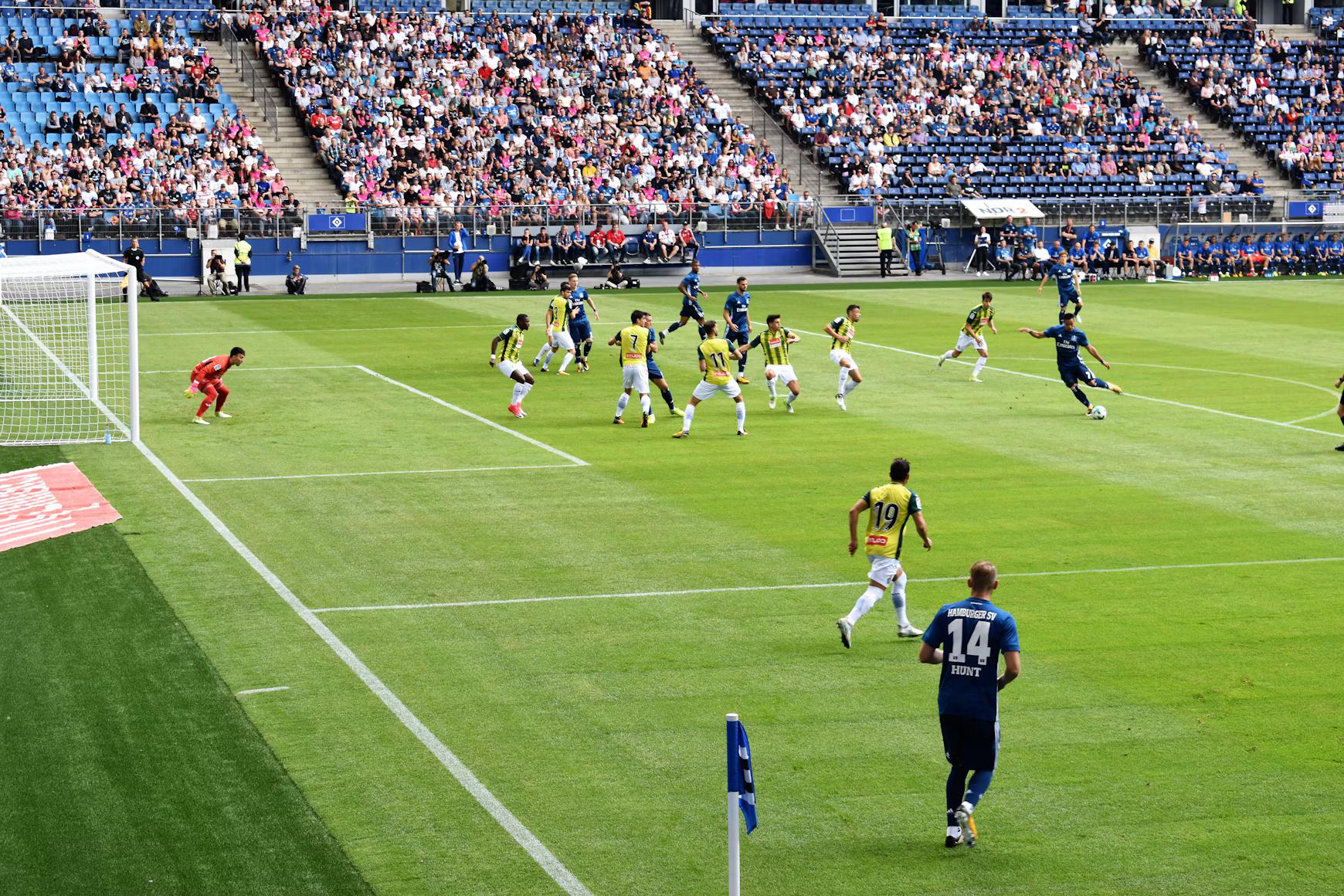
Play enough football as a central defender and a particular instinct starts to form, usually without anyone teaching it directly. The team in front of you gets disorganised — a midfielder caught upfield, a full-back dragged out of position, the shape stretched by a counter nobody quite tracked — and before the danger has fully arrived, you are already moving to cover it. Not reacting to the pass that is about to be played. Reacting to the disorganisation itself, the structural gap that the danger has not yet found but will.
This is not the same skill as reading the ball. Reading the ball is anticipation of an object's trajectory — useful, learnable, mechanical in a way that can be drilled. What is being described here is something a level up: reading the shape of a situation, sensing that a system has become unstable before any single visible event proves it. The cover is not a response to what is happening. It is a response to what the current configuration makes likely to happen next.
The strange part is how little of this is conscious in the moment. You do not run through a checklist — full-back is high, midfielder is turned the wrong way, therefore the half-space is exposed. You just feel the wrongness of the picture and your body starts closing the gap before the analysis would have finished running. Ask afterwards why you made the read and the honest answer is usually some version of it just felt off. That is not an unsatisfying answer. It is the correct one. The read happened beneath the level where language operates.
The Same Read, Wearing a Different Shirt
The peculiar thing about this skill is that it does not stay on the pitch. Sit in enough meetings, manage enough projects, navigate enough office politics, and the same sensation starts showing up in rooms with no ball in sight.
A meeting is going fine, and then it is not, and the shift happens a full minute before anyone says the sentence that makes it obvious. Someone's tone flattens slightly. A question that would normally get an enthusiastic answer gets a careful one instead. Two people who usually address comments to the room start addressing them to each other. None of this is information, exactly — nobody has said anything that would hold up as evidence. But the shape of the room has changed, the same way a back four's shape changes the instant one player drifts five yards too far forward, and the people who can feel that shift are already adjusting before the people who cannot have noticed anything happened at all.
This is, structurally, the exact same instinct as filling the defensive gap. Not reading the explicit content of what is said. Reading the configuration — who is positioned where, emotionally and conversationally, and what that configuration is making more or less likely to happen next. The colleague who senses a decision is about to go badly before the room has voted on it is doing the corporate version of stepping across to cover a winger nobody else has tracked yet.
What the Science Actually Calls This
Psychologist Malcolm Gladwell popularised a term for this in Blink: thin-slicing — the brain's capacity to find patterns in situations based on very narrow windows of experience, often producing judgments that are not just fast but more accurate than the slower, fully-reasoned alternative. The phrase captures something real: experienced perceivers are not processing less information than careful, deliberate thinkers. They are processing a condensed version of it, filtered through thousands of prior exposures to similar configurations, so that the relevant signal surfaces almost instantly and the irrelevant noise never even reaches conscious attention.
This sits on top of perceptual learning — the well-documented finding that extended exposure to a complex, variable environment reshapes what a person is capable of noticing, not just what they know. A defender who has spent a decade reading disorganised back lines has not just memorised situations. Their perceptual system has been recalibrated to register instability as a category, the way a sommelier's palate gets recalibrated to register specific notes a novice's mouth simply cannot detect yet. The same recalibration happens to anyone who spends years paying close attention to how rooms full of people behave under pressure, ambiguity, or change.
What both domains share is the underlying training condition: high-stakes, time-pressured, socially or spatially complex environments, repeated often enough that the brain stops needing to consciously search for the pattern and starts simply recognising it on arrival. Football trains this through repetition under a literal clock. Office life trains it through repetition under a quieter, slower-moving clock — but the clock is still there, and the read is still the same shape.
The Cost Nobody Mentions
There is a less flattering side to this that is worth being honest about, because it is the part most articles about "reading the room" tend to skip.
Thin-slicing is fast precisely because it is not deliberative — which means it is also occasionally wrong in ways that feel exactly as confident as the times it is right. The defender who reads a phantom danger and steps across unnecessarily has just vacated a space that was, in fact, fine. The employee who reads tension into a room that was simply tired, or quiet for reasons that had nothing to do with what they assumed, has just made a social move — a cautious comment, a defensive posture, a withheld idea — based on a signal that was never really there. The same mechanism that produces brilliant anticipatory reads produces false positives with identical conviction. There is no internal alarm that distinguishes a correct thin-slice from an incorrect one. Both arrive feeling exactly the same: certain, immediate, and entirely pre-verbal.
This is worth sitting with if reading the room is something you are good at, because the skill's biggest blind spot is that it does not announce its own failure rate. You only find out you misread the moment after you have already acted on it — closed the gap that did not need closing, gone quiet in a meeting that needed your voice, assumed hostility in a silence that was actually just someone choosing their words. The instinct is genuinely valuable. It is not infallible, and the people best at using it tend to be the ones who have also learned, the hard way, when to override it.
Why the Overlap Is Not a Coincidence
It is tempting to treat the football read and the corporate read as a charming parallel — two unrelated skills that happen to resemble each other if you squint. The more accurate description is that they are the same cognitive faculty, trained in two different arenas, both of which reward the same underlying capacity: noticing structural change before it becomes explicit content.
A football pitch and a meeting room have almost nothing in common on the surface. Underneath, they are both environments where a stable configuration can shift into an unstable one faster than anyone can articulate, where the people who survive and the people who get caught out are often separated by nothing more than how early they noticed the shape had already changed. The defender filling the gap and the colleague who feels a decision turning bad are not doing two different things that happen to look alike. They are doing the same thing, in different rooms, for the same underlying reason — because somewhere along the way, each environment trained them to feel the shift before they could have explained it.
misterillahi•Oct 11, 2026 On September 25, 2026, an independent commission found Manchester City guilty of 114 of the 115 charges brought against them by the Premier League — charges covering financial rules, disclosure obligations, and cooperation, stretching back to the 2009–2018 period. City are appealing.
I should say upfront: I support Manchester United. There is an obvious, easy version of this piece where a United fan sees a guilty verdict against City and writes something gleeful. That is not what this is. If anything, I've hesitated to write about this at all, because "we told you so" is the most boring possible reaction, and because the actual thing worth talking about here has nothing to do with which shirt I wear on a Saturday.
It's this: what happens to a principle the moment it stops being convenient?
The Standard That Only Works One Way
Pep Guardiola, defending his club publicly in 2024, said something that on its own is unimpeachable: "Everyone is innocent until proven guilty." It's a real legal standard, and a fair one. Nobody should be treated as guilty before a process has actually run.
But a standard like that only means something if it applies at both ends. It's easy to believe in "innocent until proven guilty" when you're the one waiting for proof. The actual test of whether you believe in it is what you say once the proof arrives and it doesn't go your way.
That's the moment this piece is actually about. Not the years of "let the process play out." The next sentence. The one that comes right after the verdict, when "innocent until proven guilty" quietly turns into "the process got it wrong."
This Isn't Really About Appeals
To be clear: appealing a verdict is not, by itself, dishonest. It's a normal part of any legal process, and City are entitled to use it. Nobody should be criticized simply for exercising a right that exists precisely for cases like this.
What's worth noticing is the pattern, not the mechanism. Before the verdict: patience, calm, "trust the process," a standard invoked with total confidence. After the verdict: the same process — the one just invoked as fair — is suddenly described as having gotten it wrong.
You've probably seen this exact shift somewhere that has nothing to do with football. The employee who says "let HR investigate properly" right up until HR's finding doesn't go their way, at which point HR is suddenly biased. The defendant's family who insists "let the court decide" until the court decides, at which point the court didn't understand the full context. The teenager who wants a strict rule enforced "fairly" until it's enforced on them, at which point the rule is unfair.
None of these people are lying, exactly. They usually believe both things sincerely — the belief in the process, and the objection to its outcome. That's what makes it worth paying attention to rather than dismissing. It's not hypocrisy in the cartoon sense. It's something quieter and far more common: we are all fairer in principle than we are in the specific moment the principle costs us something.
There's a version of this that's even harder to catch, because it doesn't announce itself as a double standard at all. It's the version where you genuinely can't tell, from the inside, whether you're appealing because the process failed or because the outcome hurt. Those two feel identical in the moment. Only time, and what you do next, tells them apart.
What This Actually Cost, If It's True
Here's the part that's easy to skip past if you're not the one it affects.
The charges span 2009 to 2018. In that window, Manchester City won three Premier League titles. Manchester United finished runner-up to them twice. Arsenal and Liverpool also finished as runners-up in seasons City won the league. In Europe, City built the squad and results that eventually delivered the Champions League in 2023 — a trajectory that started with the financial foundation this commission has now ruled was built on breached rules.
If the findings hold, this isn't an abstract regulatory matter. It's a decade in which specific clubs lost specific things — titles, European qualification, managerial jobs, players' peak years spent competing against a version of City that wasn't playing by the same financial rules as everyone else. In 2024, four clubs — Arsenal, Manchester United, Liverpool, and Tottenham — served legal notices reserving their right to seek compensation for exactly this: the competitive disadvantage they say City's breaches caused them.
Legal experts are broadly skeptical that any of those clubs will actually collect anything. Proving that a specific title or a specific European spot was lost because of City's specific financial breaches — rather than a hundred other footballing variables — is an extremely difficult thing to establish in court. That skepticism is probably well-founded as a legal matter. I'm no legal expert, and this piece isn't trying to be a legal argument — I'm just a fan concerned with the voice of it, the plain unfairness a supporter feels watching this play out, whatever a courtroom ultimately decides.
But legal difficulty and actual unfairness are two different things. A wrong doesn't stop being a wrong just because it's hard to put a number on it in a courtroom. Something happened to those clubs, those managers, those players, across a decade of competing in conditions that — if the commission is right — weren't level. The fact that no court will ever cleanly quantify it doesn't mean nobody paid for it. It means the cost was real and the bill will never be presented.
This is the quiet cruelty of any rules violation that plays out over years instead of one moment: there's no equivalent of a disallowed goal. Nobody replays the 2011–12 title race and hands it to someone else. The trophies stay in the cabinet. The seasons stay in the record books. The only thing that changes is what we now know about how they were won — and knowing doesn't undo anything. It just sits there, permanently unresolved, next to the trophy.
The Punishment Nobody Can Agree On
From where I'm sitting, this has to be one of the strangest positions football has ever put itself in. A club found guilty on 114 of 115 charges, spanning nine years, and the actual consequence is still an open question. Some of the game's more notable pundits and podcasts have made the same point in different words: football has never really decided what a verdict like this is supposed to cost.
There's real precedent for going hard. Juventus were stripped of a title outright over Calciopoli in 2006, with the vacated title eventually handed to Inter Milan — Italian football decided that some breaches are severe enough that the record book itself has to change. On the other side, voices closer to the English game — EFL chairman Darragh MacAnthony among them — have pushed back on that comparison, calling talk of relegation or stripped titles "nonsense," arguing you can't rewrite the past and that City are simply "an easy target" for the more dramatic headlines.
Both of those can't really be true at once. Either the breaches were serious enough to change what happened on the pitch, or they weren't. Everything in between — a fine, a suspended points deduction, a slap that fades from memory within a season — is football trying to have it both ways: acknowledging the guilt without accepting what the guilt should actually mean.
The Premier League has already set its own scale for this, whether it meant to or not. Everton lost 6 to 10 points for one season's overspend. Nottingham Forest lost 4 for the same thing. City's case is nine seasons and 114 proven charges — and if the punishment for that doesn't scale well past what a single bad season cost Everton, the number itself becomes the tell. It would be an admission, in points, that the scale of the breach was never really the point.
That's the part that should worry anyone who cares about the sport, regardless of which club they support. A guilty finding that doesn't change anything sends a clearer message than any punishment could — that breaking the rules is a reasonable bet, as long as you can afford to lose the case later.
The Actual Question Worth Asking
The instinct to appeal isn't the problem. Believing in "innocent until proven guilty" isn't the problem. The problem is treating the appeal as a neutral continuation of that same standard, when it isn't — the standard already ran its full course. An independent commission heard the case and reached a verdict on 114 of 115 charges. That is what "innocent until proven guilty" was building toward the entire time. It happened.
What comes after isn't a defense of the principle. It's a test of something else — whether the acceptance of a process only ever extended as far as the outcome you expected.
The real measure of whether you trust a system isn't how gracefully you accept the verdicts that go your way. It's what you do the moment one doesn't.
misterillahi•Sep 27, 2026 I watched a padel match recently between the world's best pair and two opponents who never had a chance. The scoreline ended 6-0, 6-1. For most of it, the crowd was quiet in the specific way crowds go quiet when the outcome stopped being in doubt somewhere around game four of the first set.
Then, somewhere in the second set, the losing pair broke serve. Won a game. The score moved from something like 4-0 to 4-1.
The crowd applauded.
I have not stopped thinking about that applause since. It was not loud. It was not particularly long. But it was, without question, one of the saddest sounds I have heard at a sporting event — and I could not work out, in the moment or since, exactly what it meant. Was it support? Consolation? Was some portion of it, uncomfortably, amused? The players on the losing side could not have known either. They just received the noise, the way applause is always received: as a single undifferentiated signal, with no way to unpack what was inside it.
The Assumption We Never Examine
Applause seems like the simplest communication system in sport. Something good happens, people clap, the volume and duration roughly track the size of the thing that happened. A tap-in gets polite acknowledgment. A wonder-strike gets a roar. The system appears to have one input and one output, and everyone involved seems to agree on what it means without ever discussing it.
This is mostly true, and it is also almost completely wrong, because applause is not one signal. It is a single physical gesture — hands meeting, repeated, at some volume — that gets used to encode at least half a dozen structurally different, and sometimes directly contradictory, emotional messages. The gesture stays the same. What is inside it changes constantly, and the person receiving it has no reliable way to tell which version they just got.
The Many Things a Clap Can Mean
Genuine celebration is the baseline everyone assumes. A goal, a winning shot, a moment of real quality, applauded in proportion to how good it actually was. This is the version of applause that requires no further thought, which is exactly why it sets the expectation for every other version.
Narrative satisfaction is a different thing entirely. When Robin van Persie scored for Fenerbahçe against Manchester United, years after leaving the club as one of its most decorated forwards, the reaction from the crowd was not primarily about the technical quality of the finish. It was about a story landing correctly — the ageing player, the homecoming, the proof that something still worked. A fairly ordinary goal can receive an extraordinary ovation if the story around it is heavy enough. The crowd is applauding meaning, not skill.
Relief from tension shows up most clearly in a penalty shootout. The save, the miss, the moment the unbearable waiting resolves into something — the applause that follows is not really about the quality of the save. It is the discharge of accumulated anxiety that had nowhere else to go.
Compassionate applause is the padel match. The crowd is not celebrating a return to competitiveness — the match, by that point, had none left. They are acknowledging, in the only language a crowd has, that the losing side is still human, still trying, and does not deserve to be completely erased by the scoreline. This is applause directed at the person rather than the performance — a way of saying we see you, and we are sorry, and also we would like this to feel slightly less brutal for everyone involved, including us.
Social obligation is the emptiest version — the polite clap at the end of something forgettable, present only because stopping would feel conspicuously unkind. It carries almost no individual meaning. It exists because groups conform, and silence in that moment would say more than anyone wants to say out loud.
Applause as apology happens when a crowd that turned on a player earlier in a match — booing a poor touch, groaning at a misplaced pass — applauds generously the moment he does something good. Part of that applause is genuine. Part of it is a crowd quietly making amends for what it said fifteen minutes earlier, without ever having to admit that's what it's doing.
Applause as farewell is the standing ovation for a substituted player nearing the end of a career. It is rarely about the specific ninety minutes just played. It is decades, arriving all at once, in one sustained sound that has almost nothing to do with what just happened on the pitch.
The Gap Nobody Can See Across
Here is the part that makes this genuinely unsettling rather than just an interesting taxonomy: the person receiving the applause cannot tell which version they are getting.
The losing padel pair, hearing that applause after finally winning a game, had no way to separate genuine warmth from pity from the small, uncomfortable possibility that some of it was quiet amusement at how far they'd fallen behind. The signal arrives identical regardless of source. Hands meeting at a certain volume for a certain duration. The emotional content — celebration, relief, compassion, apology, obligation — is invisible from the outside, encoded in a gesture that has no dialect for distinguishing between them.
This is social signaling ambiguity — the gap between what a signal is intended to communicate and what the receiver actually experiences. Humans built an entire communication system around a physical action — the clap — treating it as if it reliably transmits a single, legible emotion, when in fact it is closer to a universal container that can carry almost anything, including things that contradict each other inside the same thirty seconds.
The recipient is left doing the interpretive work alone, usually under conditions — public performance, competitive pressure, personal exposure — that make careful interpretation the last thing they have capacity for. A losing player, mid-match, hearing an ambiguous ovation, does not get to pause and workshop what it might mean. They absorb it instantly, as encouragement or pity or something in between, and play the next point regardless.
Why This Matters Beyond Sport
The same ambiguity exists everywhere applause exists — the office presentation clapped through by colleagues who are relieved it's over rather than impressed by its content, the parent applauding a child's mediocre performance because withholding it would be a different kind of cruelty, the retirement speech applauded partly for the years and only partly for the speech itself.
Nobody examines this closely because examining it would make an enormous number of ordinary, well-intentioned social moments considerably more awkward than they currently feel. It is easier to let the gesture do its work unexamined — to let a clap be a clap — than to ask, every time, what exactly is being communicated and whether the person on the receiving end is getting anything close to what was intended.
But every so often, a scoreline gets lopsided enough, or a career ends publicly enough, or a moment becomes narratively loaded enough, that the ambiguity becomes impossible to ignore. The clap sounds exactly the same as it always does. And for one uncomfortable moment, everyone in the room quietly wonders what it actually meant — including, most of all, the person it was for.
misterillahi•Sep 20, 2026 Roland Garros, 2022.
Zheng Qinwen, 19 years old at the time, just took a set from Iga Swiatek. The world number one.
One more set. But then her period came.
She called a medical timeout. Her trainer immediately wrapped her leg, but her leg was fine. It was her stomach. The cramps were so bad she could not play her own tennis anymore.
Yes, those very cramps. The menstrual cramps every woman recognizes too well.
She lost the match.
At her post match interview, she explained:
"The first day is always so tough. I have to do sport and I always have so much pain on the first day. I couldn't go against my nature. I wish I can be a man on court, but I cannot."
Then she added the three words,
"It's just girls' things, you know."
That was 2022. It has stuck with me since.
I have never played at Roland Garros, of course. My tennis is an amateur game. My biggest trophy is my father-in-law saying "Mantap, te! Finally, you hit the ball." over my clumsy backhand.
But I know Zheng’s words deeply.
Photo by Renith R on Unsplash
The day I killed my friendship
In college, I had a friend. I liked her very much because she was witty and smart. One day she invited me to a discussion about our field project. A friendly, before lunch discussion. Nothing offensive at all.
Small problem: I was PMS-ing.
So in the heat of a small argument, instead of being a civilized woman saying "can we revisit this tomorrow morning, over a coffee perhaps?", nope, I called her "anjing lu".
For my non Indonesian readers: it means "you dog". Sounds not-so-bad in English. But in my culture, when it comes from a girl's mouth, it is a big cultural disaster. Women here are raised to be soft spoken, and well mannered. We often find ourselves apologizing too many times for mistakes we did not even make.
And yep, we never really talked again. She cut me off before I could say sorry.
Honestly? I am not blaming her.
Painfully honest? I would be mad if she didn't cut me off. I know I was way out of line that day.
And here is the part that hurts the most. Even now, when I recall that memory, I have completely forgotten why I called her that. I forgot the whole conversation or even the project. What I remember vividly is the emotion. How badly I wanted to spit that curse word.
Is this real or am I making excuses?
I have PCOS, stands for Polycystic Ovary Syndrome.
If you have never heard of it, bless you, your hormones behave. Mine run a 24 hour circus.
Here is the fucked-up part. Science cannot tell me yet why I have it. It is not my diet nor simply my mother's genetics. A Dutch twin study found that PCOS is about 70% inherited, but the genes they have discovered so far only explain around 10% of it.
So, in simple words, researchers know the answer is written somewhere in my body, they are just stuck. At this point, I only hope they did not stop digging.
No, I am not saying every mood swinger woman has PCOS. But for sure, every woman has a hormone cycle. That part is undeniable.
But, mine is just… so freaking loud.
How loud? In one Danish study, 65% of women with PCOS reported mood swings, and two out of three had anxiety. And it is not in our heads. One likely reason is boring and very real: too much male hormones quietly mess with the brain chemicals that control mood.
So where a normal cycle makes a woman cry at a Thailand insurance advertisement, mine makes me end a dear friendship before lunch. Same old song that you have probably heard over and over, just at the loudest volume.
So, yeah. Flash news, it is not drama. It is what it is.
Now, Tennis
Yes, tennis. Trust me on this.
I watch Grand Slams from my sofa. One night it hit me.
Have you ever wondered why tennis-muggle can easily name Nadal, Federer, and Djokovic, but not a single women's player?
Serena Williams? Sure. But have you heard of Jabeur, Swiatek, Sakkari, Kostyuk, Raducanu, Osaka, or Sabalenka?
Men's tennis has the same champions for twenty years. Federer, Nadal, Djokovic. Now Alcaraz and Sinner, trading finals like two kids passing one trophy back and forth. They even joke about it. I am not making that up.
Women's tennis? From my sofa, it looks completely different.
Wimbledon just crowned its ninth first time champion in a row. Nine years, nine different names.
Osaka won big, then disappeared. Raducanu won once, never came back. Swiatek dominates, then loses to someone you have never heard of.
Experts and amateurs alike blame the depth of the field. The pressure. The coaching changes. The "why-women-have-slower-response-time" theory. Sure, sure. Name it all.
But there is one variable nobody even mentions: these athletes play a brutal sport while riding a hormone cycle that hits strength, sleep, and mood every single month.
Let me be clear about what I am not saying.
I am not saying women are too hormonal to win consistently. That is the lazy, sexist take I grew up hearing, and it is complete bullshit.
I am saying the opposite: they perform at the highest level on earth while carrying something the men's tour never has to think about, and nobody even counts it. It is not an excuse for losing. It is an invisible tax every woman pays, every month, quietly.
Aryna, I feel you
Aryna Sabalenka. Four Grand Slam titles. Even Serena Williams' coach, Patrick Mouratoglou, calls her tennis probably the best on tour. Have you watched how she plays? Her serve once hit 133 mph, or 214 km per hour. The second fastest serve ever recorded in women's tennis. Even my car can't go that fast.
And yet. All four titles on hard courts. Roland Garros and Wimbledon: zero. She keeps reaching Grand Slam finals and losing them, four runner up finishes in recent years. And this year at the French Open, in the quarterfinal against Diana Shnaider, she won the first set, went up 4-1, and was two points from winning while serving for the match at 5-4. Then she lost 12 of the last 13 games.
After that match, a reporter asked about her thoughts and emotions. She answered:
"No thoughts, no emotions. Just want to quit tennis right now."
And later:
"I just am so tired of me losing some matches not in the best way just because I was overemotional."
Drama? Don't think so. She has said it more than once.
And this is not new for her. Back in 2022, she cried on court because she suddenly could not serve. Hundreds of double faults in one season, over a serve motion she had done a million times.
Now, do I know if Sabalenka has PCOS? Definitely not. I am not her doctor. I am a random Indonesian woman watching her game from my sofa, snacking low calorie chips, watching my sugar intake, feeling personally attacked.
But she sure has a cycle. Every woman on that tour does. And mine, the loud version, gave me years of private lessons on what it looks like when your own body votes against you in the middle of something important.
So when I watch her cry on court over a failed serve in 2022, I do not think "weak", "shame", or "failure".
I think "oh, I feel you, girl. That's our thing. Girls' thing."
Photo by Keith Allison on Wikimedia Commons / CC BY-SA 2.0
Why I only play tennis with people who know me
I play tennis too. But with one strict rule: only with my husband and my in laws. People who have seen the worst tennis version of me and, for some reason, stayed. Or maybe they just choose not to judge me. Either way, that is why I respect them.
Frankly, my tennis spills my mood.
Good hormone day: in my head, I am Sabalenka. Once I've ruined my racket trying to imitate her serve. Bad hormone day: I can miss a ball that is not even moving.
Once I tested myself and joined a session on Reclub, an app for finding people to play sports with, basically Tinder but for active human beings. I sucked so badly, one guy taught me how to grip the racket. Forgodsake, I have played tennis for years. I know what continental grip is.
The only difference between me and Sabalenka is scale. When she cries and collapses, the whole world writes about her mental state.
When I miss lots of balls and get mad at my racket, only my husband knows. And after years of marriage, he has learned the most important skill in understanding a woman at her hormonal peak: saying nothing and passing the cold water.
The point
No. This is not a free pass to call your best friend anjing (Hell, no). There is no hormone level that makes that acceptable. I still owe her an apology. If she is reading this: I am sorry, and you were right about the project. Probably. I honestly do not remember the project.
The point is simpler. Women are hormonal. Yes. It is hormones, not character.
And painfully honest? We cannot fully control it. I have tried. The hormones won, no matter how hard I tried to reverse it. Most days, I end up trying to reduce my interaction with the world.
So please, do not define who a woman is based on who she was when her hormones were driving. She was still the driver. She just had something screaming in the passenger seat, so loud she went numb and could not think straight. Hormones explain the crash, but after the crash, we don't forget who was behind the wheel.
Zheng called it “just girls’ things”.
She was being polite. It is that invisible tax I told you about. Paid every month, by half of this planet’s population. No medical timeout is long enough to cover it, and nobody gets a trophy for surviving it.
The least woman can do is admit it is on the court.
And not being judged by it.