Myanmar Airstrike Kills 18 Fans Watching SEA Games Broadcast, Exposing Civilian Toll of Escalating War
In a stark reminder of how Myanmar’s civil war has seeped into every corner of daily life, at least 18 civilians were killed when a military aircraft bombed a village tea shop in Sagaing Region as residents gathered to watch a live SEA Games 2025 football match on television. Local media and villagers say the attack, which also injured around 20 people, struck Mayakan village in Tabayin Township—also known by its historic name Depayin—shortly after 8 p.m. on December 5, 2025. Witnesses described two bombs dropped by a jet just as dozens of people were engrossed in the football broadcast, leaving them with no time to reach makeshift shelters.
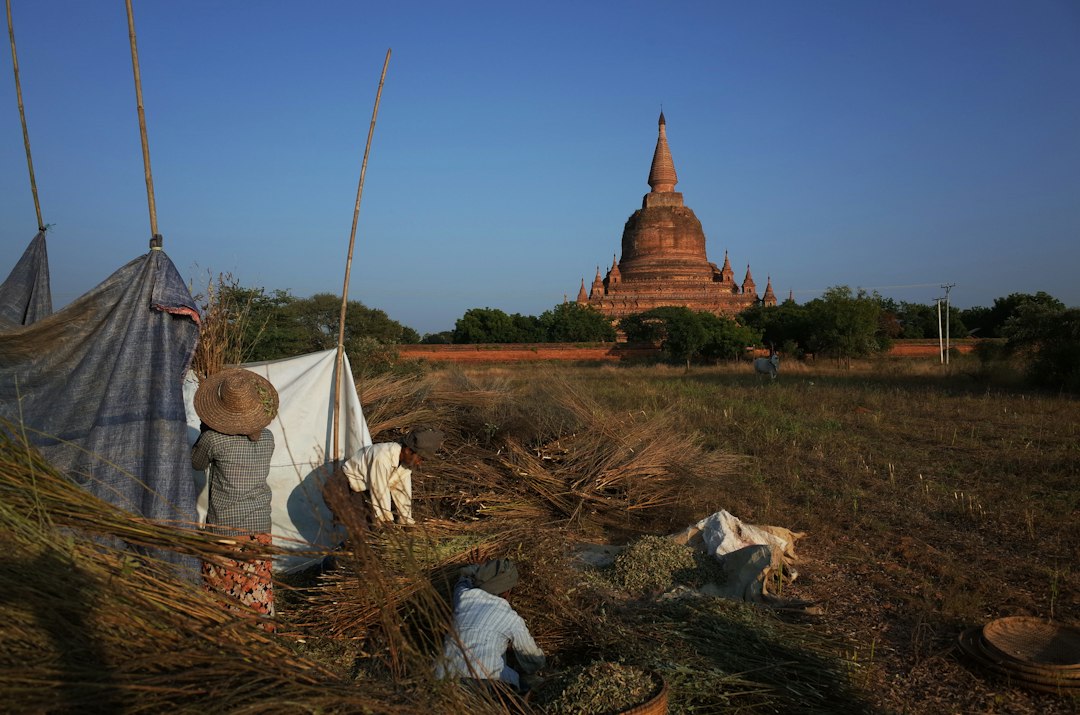
Image Illustration. Photo by Kentaro Komada on Unsplash
A Night of Football Turns to Carnage
Without warning, an air raid siren sounded. Before most patrons could move, a Myanmar Air Force jet reportedly released two bombs directly over the tea shop and the surrounding residential area. The blasts destroyed the modest venue and damaged more than 20 nearby houses, residents told independent outlets and international media. Among the dead were a five‑year‑old child and two schoolteachers, underscoring how indiscriminate the violence has become. Survivors described scenes of chaos as they tried to pull bodies from the wreckage in the flickering light of televisions and burning debris.
Sagaing: A Resistance Stronghold Under the Bombs
Sagaing has been singled out for some of the most relentless air and artillery campaigns of the conflict. Rights monitors and journalists have documented repeated airstrikes on villages, churches and markets across the region since 2022, often far from identifiable military targets. Amnesty International’s investigation into a January 2024 bombing in another Sagaing village, which killed 17 civilians near a church, concluded that the attack likely constituted a war crime based on the absence of any legitimate military objective and the use of explosive weapons in a populated area.
Airpower as a Central Weapon of the Junta
In March 2025, an airstrike on Let Pan Hla village in Singu Township, north of Mandalay, killed at least 27 civilians and injured some 30 others when bombs landed on crowded market stalls, according to resistance groups and independent media reports. In October 2023, a night‑time air and artillery attack on a displaced persons settlement in Kachin State killed 28 civilians, including 11 children, in what Human Rights Watch described as an “apparent war crime” because the site hosted hundreds of non‑combatants with no visible military objective nearby. Rights groups argue that the pattern reveals a strategy of terror aimed at depopulating resistance strongholds and punishing communities seen as sympathetic to armed opposition groups.
Rising Civilian Death Toll in a Widening War
Airstrikes alone have accounted for a growing share of those casualties. According to data compiled by Myanmar research networks and cited by humanitarian groups, the military has conducted more than 4,000 airstrikes nationwide since the coup, killing at least 2,200 civilians and injuring over 3,400 as of early 2025. These attacks have hit schools, religious sites and healthcare facilities, deepening what the UN has called a “multi‑dimensional human rights catastrophe” inside the country.
International Condemnation and the Question of Accountability
Human rights advocates argue that incidents like the Mayakan tea shop bombing are precisely the kind of cases that should feed into evidence files assembled by the Independent Investigative Mechanism for Myanmar (IIMM), a UN body tasked with preserving documentation for future criminal prosecutions. While the junta dismisses such inquiries as foreign interference, international jurists note that command responsibility could, in theory, extend up the chain of Myanmar’s military leadership if cases reach international or hybrid tribunals in the future.
Communities Under Siege Dig In—Or Flee
Their choices mirror those facing millions across Myanmar. The UN estimates that more than 3 million people are currently displaced inside the country due to fighting, persecution and natural disasters exacerbated by the conflict, such as the devastating 2023 cyclone and the 2025 central Myanmar earthquake. Aid groups say access to many of these communities is severely restricted by the junta, which has been accused of blocking humanitarian relief even in disaster zones where airstrikes and ground offensives continue.
Sport as Refuge, and as Target
For many in Myanmar, football and the regional spectacle of the Southeast Asian (SEA) Games offer a rare emotional escape from the grinding realities of war and economic collapse. Even in conflict‑affected regions, residents often cluster in tea shops or community halls to watch tournaments featuring the national team, a momentary restoration of normal life and national pride.
Conclusion: A Village Tragedy, a National Pattern
The bombing of villagers peacefully watching a SEA Games football match in Mayakan is, in one sense, a localized tragedy: a single tea shop reduced to rubble, 18 names added to a growing list of the dead, children orphaned or maimed. Yet the circumstances of the attack—the use of airpower far from an active frontline, the targeting of a civilian space at a moment of leisure, the lack of warning or shelter—fit a broader pattern documented across Myanmar since 2021 by journalists, humanitarian groups and UN investigators.
As the junta pushes ahead with widely criticized elections and ramps up aerial operations in contested regions, analysts warn that similar incidents are likely to continue unless there is a decisive shift in international pressure—particularly measures to halt the flow of aviation fuel and weapons systems to Myanmar’s military. For villagers across Sagaing and beyond, the question is more immediate and personal: when the next big match is on, will it be safe to watch?
You've reached the juicy part of the story.
Sign in with Google to unlock the rest — it takes 2 seconds, and we promise no spoilers in your inbox.
Free forever. No credit card. Just great reading.