Israel Intensifies Strikes in Lebanon, Targeting Hezbollah and Its Elite Radwan Force
Israel has stepped up its military campaign in Lebanon with a string of airstrikes aimed at Hezbollah positions and the group’s elite Radwan Force, deepening fears that the simmering confrontation along the border could tip into a broader war. In recent weeks, the Israel Defense Forces (IDF) have hit training compounds, logistics hubs and launch sites across southern Lebanon and the Beqaa Valley, which Israel says are central to Hezbollah’s cross-border attack plans.
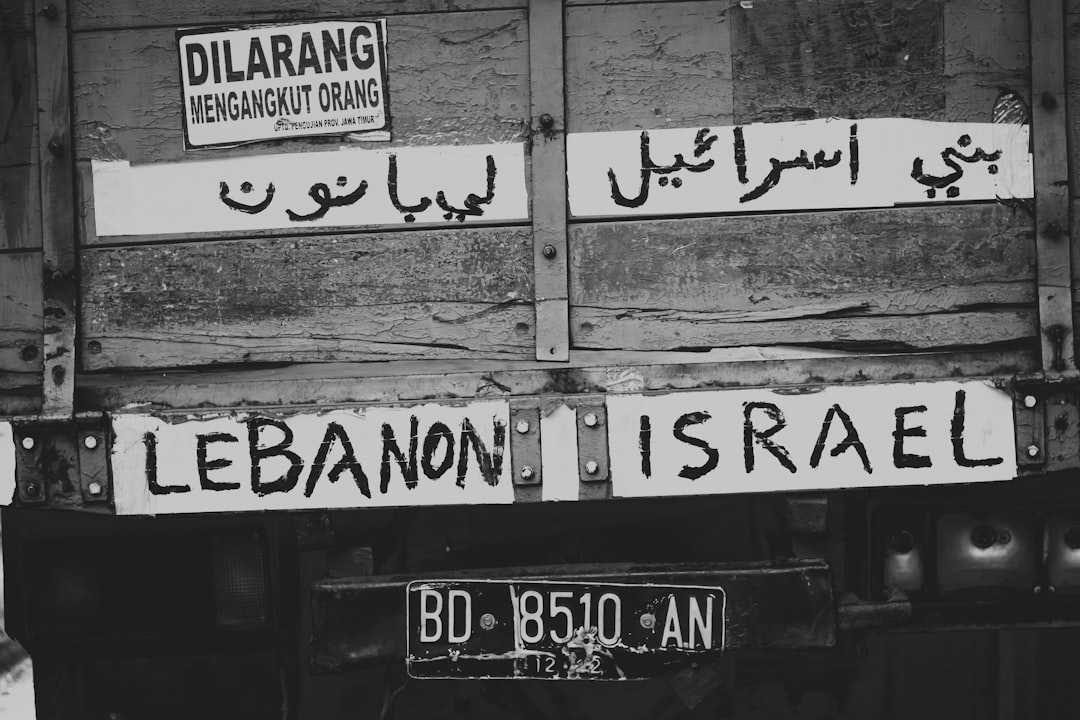
Image Illustration. Photo by Hobi industri on Unsplash
The escalation unfolds against the backdrop of a fragile truce reached in November 2024, which formally ended Israel’s large-scale invasion of Lebanon but failed to halt mutual attacks and targeted killings. As Israel focuses on degrading Hezbollah’s Radwan units, Lebanon’s already battered civilian population faces new displacement, mounting casualties and deepening political rifts over the future of the powerful armed group.
Radwan Force: Hezbollah’s Spearhead on the Israel Border
The Radwan Force is widely regarded as Hezbollah’s most capable ground unit, trained and equipped for rapid incursions into northern Israel, hostage-taking and the seizure of border communities. Israeli and Western analysts describe Radwan as an elite formation of several thousand fighters, many of them veterans of the Syrian war, with specialized training in urban warfare, tunnel operations and coordinated rocket and drone use. The unit has been central to Hezbollah’s deterrence strategy since the 2006 war, when the group demonstrated its ability to fire sustained rocket barrages deep into Israel.
Since cross-border hostilities reignited in 2023, Israel has increasingly singled out Radwan commanders and infrastructure. The IDF says targeted killings and precision strikes are meant to prevent Radwan teams from consolidating along the frontier and to disrupt what Israel alleges are plans for coordinated raids on Israeli communities. In April 2024, the Israeli military announced it had “eliminated” Ali Ahmad Hussein, a Radwan commander it accused of directing attacks on Israeli forces in recent months, during an airstrike in southern Lebanon. In subsequent operations through 2024 and 2025, Israel repeatedly reported killing Radwan operatives and field officers in southern Lebanon and the Beqaa Valley.
New Wave of Airstrikes: Training Compounds and Logistics Hubs Hit
The latest escalation has focused on what Israel describes as Radwan training and logistics facilities. Around midnight on December 9, 2025, Israeli jets carried out at least six strikes near Jabal Safi and the outskirts of Roumin in the Iqlim al-Tuffah area of southern Lebanon, according to local media and residents. The IDF’s Arabic-language spokesperson said the raids targeted “a training complex used by Hezbollah’s Radwan unit to prepare its members to plan and execute terrorist operations,” as well as military buildings and a launch site used to advance attacks against Israel. Israeli outlets reported that the complex had been used for firearms and weapons training by Radwan fighters.
The Iqlim al-Tuffah strikes followed a pattern of operations over the past year in which Israel has systematically bombed what it calls Radwan bases and weapons depots well beyond the immediate border region. In July 2025, Israeli aircraft hit multiple Hezbollah compounds in Lebanon’s Beqaa Valley, which the IDF said were used for training fighters and preparing cross-border attacks, marking an expansion of the air campaign deeper into Lebanese territory. Earlier that year and into 2024, strikes in the valley and southern districts targeted weapons storage facilities, engineering equipment and suspected Radwan training bases, with one research group documenting the killing of at least five Radwan operatives at such sites in a single week in September 2025.
High-Profile Assassinations and Expanding Targets
Israel’s campaign has not been limited to training grounds. It has also featured high-profile strikes in urban areas, including the Lebanese capital. On November 23, 2025, an Israeli airstrike on a building in Beirut’s Haret Hreik district killed Haytham Ali Tabatabai, a senior Hezbollah commander and the group’s chief of staff, along with four other militants, according to Lebanese and international reports. The attack injured at least 28 people and marked the first strike on Beirut in months, underscoring Israel’s willingness to hit targets in densely populated neighborhoods associated with Hezbollah’s leadership. In September 2024, another airstrike in Beirut’s Dahieh suburb destroyed an apartment block, killing at least 55 people, including 16 Hezbollah militants and several members of the Radwan command structure, according to Lebanese authorities and international media. Israeli officials said the attack targeted a meeting of Radwan commanders they accused of orchestrating attacks on Israel’s north.
Beyond Beirut, Israeli air operations have devastated parts of southern Lebanon and eastern regions. During a series of raids on the Beqaa Valley between October 28 and November 6, 2024, at least 134 people were killed and more than 117 wounded, making it one of the deadliest episodes there since the escalation began in 2024, according to local officials and international organizations. The strikes hit about a dozen settlements and were described by the regional governor as the most intense in the area since the start of the Israel–Hezbollah escalations that September. In Tyre District, a separate wave of airstrikes from October 23 to 25, 2024, killed at least seven civilians and wounded 17, while also damaging historic sites that prompted concern from UNESCO.
Ceasefire Under Strain and Civilian Toll
The acceleration of Israeli strikes on Radwan and broader Hezbollah targets comes despite — and in many ways because of — a ceasefire signed between Israel and Lebanon in November 2024. The deal, brokered with international backing, was meant to halt large-scale hostilities and pave the way for the withdrawal of Israeli forces from Lebanese territory and the gradual disarmament or redeployment of Hezbollah units in the south. Yet both sides have accused the other of serial violations, and Israeli officials acknowledge that the military continues to maintain troops in several areas of southern Lebanon while carrying out regular airstrikes on what it calls “terror infrastructure.” Hezbollah, for its part, has launched rockets and anti-tank missiles at Israeli military positions and border communities, arguing that it is responding to Israeli aggression and violations of Lebanese sovereignty.
Civilians have paid a heavy price. Beyond the hundreds killed and wounded in major air campaigns in the Beqaa Valley, Tyre and Beirut, sporadic strikes have claimed lives in smaller towns and villages across the south. In the border region, tens of thousands of Lebanese residents have been displaced since 2024, adding to a country already burdened by economic collapse and a prolonged refugee crisis.
Political Fallout in Beirut and International Concerns
Israel’s focus on Hezbollah and Radwan has intensified a political struggle inside Lebanon over the group’s role and the balance between state and non-state arms. President Joseph Aoun and Prime Minister Nawaf Salam have moved to deepen ceasefire talks with Israel and explore security arrangements along the border, steps they say are necessary to stop Israeli hostilities and restore state control. In December 2025, Lebanon sent civilian representatives to a U.S.-chaired committee overseeing the 2024 ceasefire — a rare form of direct engagement with Israel that Aoun argued was aimed at securing an Israeli withdrawal and the return of displaced civilians. Hezbollah has sharply criticized these moves, warning against international pressures to disarm and accusing the government of offering “free concessions” that will not restrain Israel.
International actors, meanwhile, are scrambling to prevent a wider war. The United Nations is preparing for the eventual drawdown of its long-standing peacekeeping mission in southern Lebanon and has warned of the risk that continued escalation could overwhelm Lebanon’s security forces. The European Union has discussed ways to bolster Lebanon’s Internal Security Forces so the army can focus on border security and potential steps toward disarming Hezbollah, according to internal planning documents. But with Israel pledging to intensify its operations against Radwan and other Hezbollah units if it deems the ceasefire terms unmet, there is little sign that the military tempo will ease soon.
Outlook: Between Deterrence and the Risk of Full-Scale War
Israeli officials argue that striking Hezbollah’s Radwan Force and related infrastructure is a defensive necessity to ensure that residents of northern Israel can safely return home and that the group cannot threaten new incursions. Hezbollah and many Lebanese, by contrast, see the campaign as part of a broader strategy to weaken the movement militarily and politically while maintaining Israeli leverage inside Lebanese territory, despite the ceasefire framework.
For now, both sides appear to be calibrating their actions below the threshold of an all-out war reminiscent of 2006. Yet the pattern of targeted assassinations, deep-penetration airstrikes and retaliatory rocket fire keeps the risk of miscalculation dangerously high. As Israel continues to “pound” Hezbollah and Radwan sites from the air and Hezbollah insists on its right to respond, the narrow strip of land along the Israel–Lebanon frontier remains one of the most volatile fault lines in the Middle East.
You've reached the juicy part of the story.
Sign in with Google to unlock the rest — it takes 2 seconds, and we promise no spoilers in your inbox.
Free forever. No credit card. Just great reading.