From the air, Pondok Pesantren (Islamic boarding school) Darul Mukhlisin in Aceh Tamiang, Aceh Province, looks less like a place of learning and more like an island in a sea of wood. Massive timber logs, some as thick as three adult arm spans, are piled in chaotic layers around the mosque and dormitories, remnants of the devastating flash floods and landslides that recently struck several provinces in Sumatra.
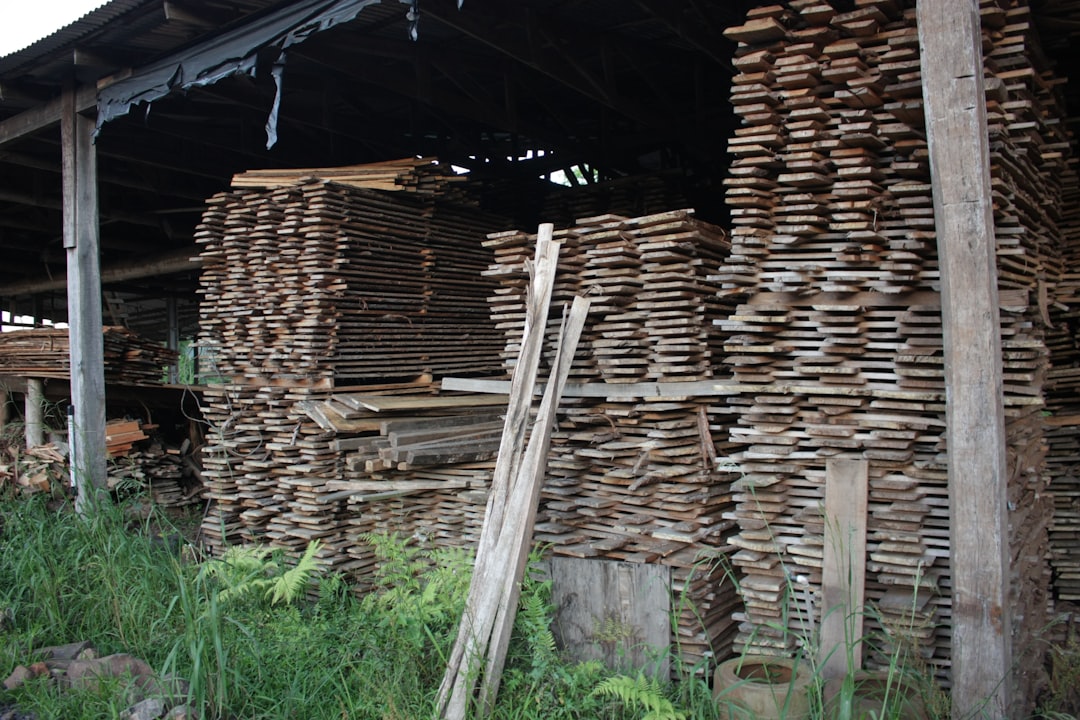
Image Illustration. Photo by Clevenider Petit on Unsplash
More than a week after the waters receded, hundreds of cubic meters of logs still blanket the school’s main field and surrounding grounds, cutting off normal activities and raising urgent questions about environmental governance, disaster preparedness, and the safety of Indonesia’s dense network of Islamic boarding schools.
A Boarding School Turned into a "Pool of Wood"
Darul Mukhlisin is located in Tanjung Karang, Karang Baru sub-district, in the lowland area of Aceh Tamiang, eastern Aceh. The school is one of the largest Islamic boarding schools in the district, hosting hundreds of santri (students) from surrounding villages. Local education directories describe it as a key religious education center in the regency, offering both Quranic and general studies.
When heavy rains triggered flash floods in early December 2025, water surged from the upper reaches of the Tamiang River system, carrying soil, rocks, and vast quantities of timber down from the surrounding hills. Aerial images and on-the-ground reporting show how the torrent turned Darul Mukhlisin’s yard into what local media called a "pool of wood," with logs jammed against the mosque, classrooms, and boarding houses.
By December 12, television footage from KompasTV showed that the wooden debris covering the school’s main field had still not been cleared. Authorities had yet to provide a concrete plan to remove the timber, leaving the school community trapped in a hazardous landscape where even walking across the yard means clambering over unstable logs.
215 Students Shut Out of Classrooms
The physical damage to Darul Mukhlisin is matched by its educational disruption. According to local broadcast reports citing school officials, 215 santri have been unable to resume classes because the school’s field, access routes, and parts of its facilities remain buried under layers of logs and mud.
The scene contrasts sharply with national commitments to ensure safe learning environments at Islamic boarding schools. In October 2025, Indonesia’s Coordinating Minister for Community Empowerment reiterated that President Prabowo Subianto had ordered priority support for boarding schools with vulnerable infrastructure, particularly those with more than 1,000 students or in dangerous conditions.
Yet at Darul Mukhlisin, an institution that has become a local educational hub, the immediate challenge is far more basic: clearing the debris so that students can safely return at all. With the school grounds still choked by wood and mud, boarding activities are heavily curtailed, and study routines have been displaced or improvised in makeshift spaces.
Flash Floods and a Wider Disaster in Aceh
The crisis at Darul Mukhlisin is part of a much larger disaster that has unfolded across Aceh and other parts of Sumatra. By December 6, 2025, regional outlets citing official figures reported at least 353 deaths from the floods in Aceh alone, with thousands more displaced as homes, roads, hospitals, and public offices were inundated or damaged.
Aceh Tamiang has been described by provincial leaders as one of the hardest-hit districts. Local government buildings, including the police station, prosecutor’s office, courthouse, and the regional hospital (RSUD Aceh Tamiang), were all affected, complicating emergency response and recovery efforts.
In Tanjung Karang, where Darul Mukhlisin sits, the floodwaters reportedly reached second-story levels. Residents describe how homes were either partially submerged or swept away entirely, leaving only foundations and debris. For many survivors, the presence of the pesantren’s sturdy mosque — which acted as a barrier that slowed the rush of logs — may have prevented even worse destruction in adjacent neighborhoods.
Timber from the Hills: Natural Disaster or Human-Made?
Where did all the wood come from? Residents and reporters on the ground say the logs were carried down from hills connected to protected forest areas upstream. Many of the logs bear signs of human cutting, including squared-off ends and milled boards, suggesting that at least part of the debris flow consists of timber from logging activities, and not only uprooted trees from natural landslides.
This pattern is not new in Indonesia. Severe floods in forested regions often bring with them large volumes of timber, raising suspicions that illegal logging or poorly regulated concessions have destabilized slopes and increased the load of woody debris during extreme rainfall events. National police and environmental agencies have previously opened investigations into illegal logging following similar disasters in Sumatra.
Indonesia’s Ministry of Environment and Forestry has long warned that deforestation and land-use change in upstream watersheds make communities downstream more vulnerable to flash floods and debris flows during intense rainfall, especially under climate change scenarios that increase the frequency of extreme weather.
Pesantren on the Front Line of Environmental Risk
Islamic boarding schools like Darul Mukhlisin are a central part of Indonesia’s educational landscape. The Ministry of Religious Affairs recorded more than 39,000 pesantren nationwide in 2023, educating over 4.5 million students — a network that often extends into rural and environmentally fragile areas.
Researchers studying environmental awareness in Islamic boarding schools have found that many pesantren historically paid limited attention to ecological issues, but that targeted social interventions and education programs can significantly improve environmentally friendly practices on campus — from waste management to tree planting and water conservation.
Some boarding schools have even become models of environmental stewardship. Bahrul Maghfiroh Islamic Boarding School in Malang, East Java, for example, has developed rainwater injection wells, organic farming, and solar-powered lighting as part of a wider conservation initiative, turning a once-arid campus into a greener, more resilient environment.
At Darul Mukhlisin, the immediate focus is survival and recovery — but the disaster underscores the need to integrate environmental risk assessments, land-use planning, and climate adaptation strategies into the long-term development of religious schools across Indonesia’s flood-prone regions.
Slow Cleanup, Difficult Access
Despite national attention, physical cleanup at Darul Mukhlisin has been slow. Local media report that the volume and weight of the logs, combined with muddy, damaged access roads, have hampered heavy equipment and delayed the arrival of relief and technical teams. In some parts of Aceh Tamiang, elephants from conservation units have been considered or deployed to help drag logs from remote or flooded areas — a sign of how extreme the conditions are.
In Tanjung Karang itself, thick mud from the Tamiang River has reportedly inundated the local public hospital and road network, prompting the district government to set a target of three days to clear critical health facilities — an ambitious goal given the scale of the sludge and debris.
What Comes Next for Darul Mukhlisin?
For now, Darul Mukhlisin stands as a stark symbol of overlapping crises: climate-related extremes, contested forest governance, unequal disaster response, and the vulnerability of Indonesia’s religious education system to environmental shocks. Clearing the wood and mud will be only the first step.
Rebuilding will require not only physical repairs but also new conversations between local communities, religious leaders, and government agencies about how to protect schools that sit downstream from forests and rivers. That could mean stricter enforcement against illegal logging, reforestation of degraded hillsides, improved early-warning systems, and integrating environmental risk into decisions about where and how to expand or renovate pesantren infrastructure.
In the short term, the 215 students of Darul Mukhlisin are waiting for a simpler outcome: a safe, clean place to study and sleep. Whether that happens quickly — and whether the lessons of this “encircled” pesantren are carried into national policy — may determine how many other schools in Indonesia will face a similar fate when the next heavy rains come.